


Captain Jeremy Burfoot, author of The Secret Life of Flying
I wish I had a dollar for every person who, when hearing I’m an author, said that they planned to write a book sometime. When I ask them why they haven’t done it, some will say that they are too busy right now. Others will say they just don’t know where to start. I tell them to just make a logical plan and get started. I know it’s not quite that simple, but it’s really not that hard either.
When I decide to write a book, I ask myself who the reader will be and what do they want to hear, then I tell them the story. I write as if I’m sitting there talking to the reader.
I do use Scrivener software to organise my ideas. You do need a structure and a plan and Scrivener is good for this. Scrivener is also useful for converting the work into the correct formats for publishing once the writing is done.
I should probably be using voice recognition software to get the words down on ‘paper’, but I don’t. I type. Touch typing is the practice or skill of typing using all one’s fingers and without looking at the keys. I can’t do that, but I’ve perfected banging away with my two index fingers at a pretty good speed.
I always get up early to write. There’s a limit to how much you can do in a day before your brain starts feeling like it’s pushing through a pool of thick mud. After a few hours, you start feeling like you are wasting time and the work is dropping in quality. That’s when it’s time to stop. On a good day, I can punch out up to 2,000 words. A standard book is about 80,000 words so that’s 40 good days. Of course, not every day is a good day, and you need days off. On some days when I’m not feeling overly inspired, I will still write and then go back and add some personality on another day when I am in the mood.
I generally go and exercise after writing and it’s during the exercise that I think about what I wrote and come up with ideas on how to improve it. I’ll make notes on my phone and then edit my writing when I’m back from the gym.
I don’t suffer from ‘writer’s block’. With non-fiction, the info is either all in your head or available through research so as long as I have a plan, I’m fine. Fiction is slightly different, but you can go any way you want with fiction, and you can change direction when you want. You can even invent a new character to fill a gap. It’s fun.
Many of my writing ideas come from everyday life. You just need to be able to see the crazy and funny side of it. I’m lucky that aviation is full of material like this, and the characters are often larger than life.
Be sure to check out my latest book, The Secret Life Of Flying.
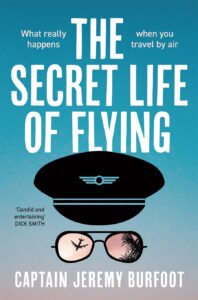
The Secret Life of Flying by Captain Jeremy Burfoot
How does a plane stay up in the air?
Does the Mile-High Club actually exist?
When you flush the toilet, where does it all go?
Buckle up for some turbulence because nothing flies under the radar for Captain Jeremy Burfoot.
With more than 35 years of airline experience, the former Qantas pilot presents an Airbus-load of stories about unruly passengers and cockpit clashes, and expertly navigates the bizarre myths surrounding everyday air travel. He explains important details like why plane wings actually bend, which in-flight surfaces carry the most germs and how to make plane food taste better.
Jam-packed with hilarity, horror stories and honest insights, The Secret Life of Flying is part memoir and part guide to the skies – a razor-sharp and First Class read for anyone who has ever wondered who’s really flying the plane …
Get your copy here.